Posts

Punching Tonnage Calculator: Simplifying Metalworking Processes

Image
Metal fabrication is a complex process that requires precise calculations to ensure optimal results. One crucial aspect of metal fabrication is determining the punching tonnage required for a specific project. Punching tonnage refers to the force needed to punch a hole in a metal sheet or plate. To simplify this calculation and streamline the fabrication process, a punching tonnage calculator comes into play. In this post, we will explore the importance of a tonnage calculator and how it benefits metal fabricators. Understanding Punching Tonnage Calculation Punching tonnage refers to the force required to punch a hole through a specific material using a punching machine. It is measured in tons and is a crucial parameter to consider during the metalworking process. Accurate punching tonnage calculation ensures optimal machine performance, prevents tooling and equipment damage, and helps achieve precise hole-punching results. By understanding and calculating punching tonnage, metalw...
Measures To Take When Working with Tube Hole Punching Machine

Image
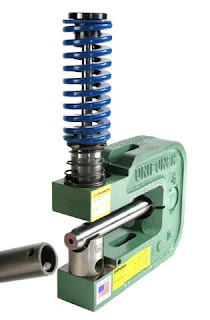
Punching in sheet metal processing refers to a slitting procedure when a sheet is completely cut through in one motion. Round holes are produced in the sheet, for instance, by single strokes that can happen in a very short period of time. Punching machines can also be used to produce outside outlines. Punching Making a hole in a tube with a die supported by a mandrel is known as tube punching. Tube "punching" is the act of using a punch to create a hole without the use of a die or die support. The result is a dimpled hole. Geometrically speaking, punched-shaped circular holes are always flawless. A punching machine operates similarly to a paper hole punch. The hole support and circular opening are both pressed into the paper by the punch. In doing so, a circle is formed. The punch container is filled with the offcuts that were punched out. The same principle applies when punching metal: place the sheet between the punch and the die. Punch descends and slants into die. T...

Everything You Should Know About Aluminum Extrusion

Image
Aluminum extrusion has seen substantial growth in application in product design and manufacturing over the past few decades. Although they are frequently a part of window or door systems, their uses are not limited to those. Aluminum bars are used in a wide variety of construction and manufacturing processes, so each product's quality must be unsurpassed. Let’s see what aluminum extrusion is, the types of extrusion, the different shapes of extrusion, and where they are used. What is aluminum extrusion? Using the aluminum extrusion method, an aluminum alloy can be formed into an object with a clear cross-sectional profile for a variety of functions. The special combination of physical properties that aluminum possesses is best utilized during the extrusion process. Despite being one-third the density and rigidity of steel, aluminum's flexibility makes it easy to mill and cast, and the product offers durability and stability, especially when mixed with other elements. Diffe...

Different Parts of the Punching Machine and their Functions

Image
What is a punching machine? Punching is the process of creating custom holes in metal sheets, and thus, the punching machine is a very important machine for the metal industry. It can reduce your fabrication time and increase your efficiency, so it's worth it to invest in a machine. The uses of the punching machine are immense, and it is important to ensure that you have the best machine for your requirements. The design plays a major role in the efficiency of the machine, and if you are buying a new punching machine, it is important to be aware of the best designs on offer. Parts of Punching Machines and Their Function Punch and Die. Punches and dies are a type of cutting tool equipment utilized in the high-heat metal forming process known as hammering and punching. The cutting body needs a "punch" to act as a pusher, and the punch pushes into the die as a secondary item. Strippers Strippers and punches are a common combination in dies. The Stripper, as it...

All about Hydraulic Presses & Hydraulic Press Die Manufacturers

Image
We all know how much competitiveness exists in the hydraulic press market. Based on the demands of your application, manufacturers decide on factors like material design, load restrictions, and configuration when building a hydraulic press. Stainless steel is typically used in the design of hydraulic presses by manufacturers. In this post, you will learn everything about hydraulic press and hydraulic press die manufacturers. What Is a Hydraulic Press? A hydraulic press is a mechanical tool that shapes, deforms, and arranges various kinds of metals, plastics, rubber, and wood using the static pressure of a liquid. The mainframe, power system, and controls make up the hydraulic press's mechanism. In a hydraulic press, a piston that functions as a pump to generate mechanical force applies pressure to a liquid. Hydraulic Press Working When a double-acting piston is pressed into hydraulic fluid, a hydraulic press is initiated. The fluid is pushed into a larger cylinder where mor...

Things to Keep in Mind While Operating Punching Machines

Image
The fact of the matter is that manufacturing is the cornerstone of the modern business world, and it feeds into everything else. This has led to a scenario where most entrepreneurs are keen to step into the field of manufacturing. Looking at the market size, their decision is on-point but what about the tough competition that follows? The competition is quite ruthless and this has turned running a manufacturing firm arduous. The brighter side is that certain considerations can make this daunting task a bit better. And the foremost among these considerations is the maintenance and operation of machines that are used in manufacturing. Machines are the core of any manufacturing firm and that is why it is imperative to look into their maintenance to enhance their durability. And when it comes to punching machines then this factor becomes even more crucial. If you have no idea of what precaution you need to take then have a look at our below-mentioned list.     ...

Different types of Punch & Die Centre and their uses

Image
Punches of various varieties are commonly used in mechanical engineering workplaces. Center punch, prick punch, pin punch, and drift punch are a few of the most common varieties. Punches are used in workshops to locate centre points for drawing circles, punch holes in sheet metals, start holes for drilling, remove broken rivets, bolts, or pins, and transfer hole position in patterns. Punches are usually classified by the form of their tips. Different types of punches are frequently used in workshops to maximize their respective capabilities and purposes. Here are some sorts of punch & Die Centre and their intended usage if you're seeking a certain type of punch for your task. Centre Punch While a prick punch can provide suitable reference markings for metals, greater indentations are required for some metalworks. It can produce indentations and reference markings in metal large enough for drilling activities using a centre punch. The point of a centre punch is ground at a...